
The AI in “AI-powered trading”, done by engineers, not marketers
We use machine learning where it genuinely earns its place in trading research and software, and we’re just as clear about where it doesn’t. No crystal balls, no black boxes, no promises about profit.
What “AI-powered” means here, and what it doesn’t
“AI” is the most over-promised word in trading, so let’s be precise. We do not sell an AI that predicts the market, generates signals, or makes money, and it’s worth being wary of anyone who does. What we do is apply machine-learning techniques, as engineering tools, to specific problems: recognising patterns, reading news at scale, cleaning and structuring data, and testing ideas more rigorously. Applied well, that’s genuinely useful. Sold as a money-machine, it’s a fantasy.
Where AI genuinely helps
- Pattern recognition. Machine-learning models, including deep learning, to detect the patterns your strategy is built around, across many instruments and timeframes, more consistently than eyeballing charts.
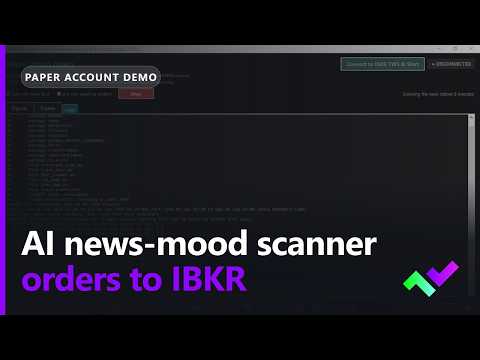
- Natural-language processing. Reading news, filings and sentiment at a scale no person can, and turning it into structured, timestamped inputs your system can act on: the event, not the noise.
- Feature engineering & data. Building the clean, well-structured inputs that any model or strategy depends on. Most of the value in applied ML is here, in the unglamorous data work, not in the model.
- Research acceleration. Using modern AI tooling to explore ideas, prototype and iterate faster, so more hypotheses get tested properly in less time.
The honest part: where AI fails
Every one of these has bitten someone who trusted a model too far, so we design against them from the start:
- Overfitting & data leakage. A model that looks brilliant on history and useless live. We guard with strict out-of-sample and walk-forward testing.
- Regime change. Markets shift, and a model trained on one regime can quietly stop working. We test across regimes and build in the checks to notice.
- Opacity. A model you can’t explain is a model you can’t trust with money. We favour approaches we can reason about, and we keep a human in the loop.
And sometimes the honest conclusion is that AI adds nothing here, that a simpler, transparent method is better. When that’s true, we say so.
AI agents in trading software: what we build, and what we don't
“AI trading agent” can mean very different things, so here is where we draw the line. We build agents as engineering tools inside a system you control:
- Research assistants that gather, summarise and structure filings, news and data for the hypothesis you are testing.
- Data and monitoring agents that clean incoming data, watch a live system, and alert a person when something looks wrong.
- Execution agents that follow your written rules, with your risk limits enforced in ordinary code that the agent cannot override.
What we don't build is an agent that decides what you trade. The strategy and every trading decision stay yours, and so does the off switch.
AI-assisted development, with a hard integrity guard
We also use AI tooling to build faster, but never at the cost of correctness. There’s a strict rule: AI never silently changes your trading logic. Every change is reviewed, and a sample of trades is checked against the written rules, so nothing is “hallucinated” into a system that trades real money. You can see that discipline in practice in the case study on our multi-market research platform.
Your hypothesis, your decisions
As with everything we build: you bring the idea, we bring the engineering and the rigour, and every decision stays yours. We don’t supply strategies or signals, we don’t give investment advice, and we make no claim about how any of this performs. Where we test an idea, we test it honestly; see our quantitative research & consulting.
Common questions
- Can your AI predict the market?
- No, and be wary of anyone who says theirs can. We don’t sell a system that forecasts prices, generates signals, or makes money. We apply machine-learning techniques as engineering tools to specific problems in research and software, applied to your ideas. That’s useful; predicting the market isn’t what it does.
- Do you use AI to build software faster?
- Yes, we use AI tooling to explore, prototype and iterate. But under a hard rule: it never silently changes your trading logic. Every change is reviewed and trades are checked against the written rules, so nothing gets “hallucinated” into a live system.
- Is AI always the right tool?
- No, and we’ll tell you when it isn’t. Plenty of strong strategies use no machine learning at all. If a simpler, transparent approach does the job, that’s what we’ll recommend, a model you can’t explain is a model you can’t trust with real money.